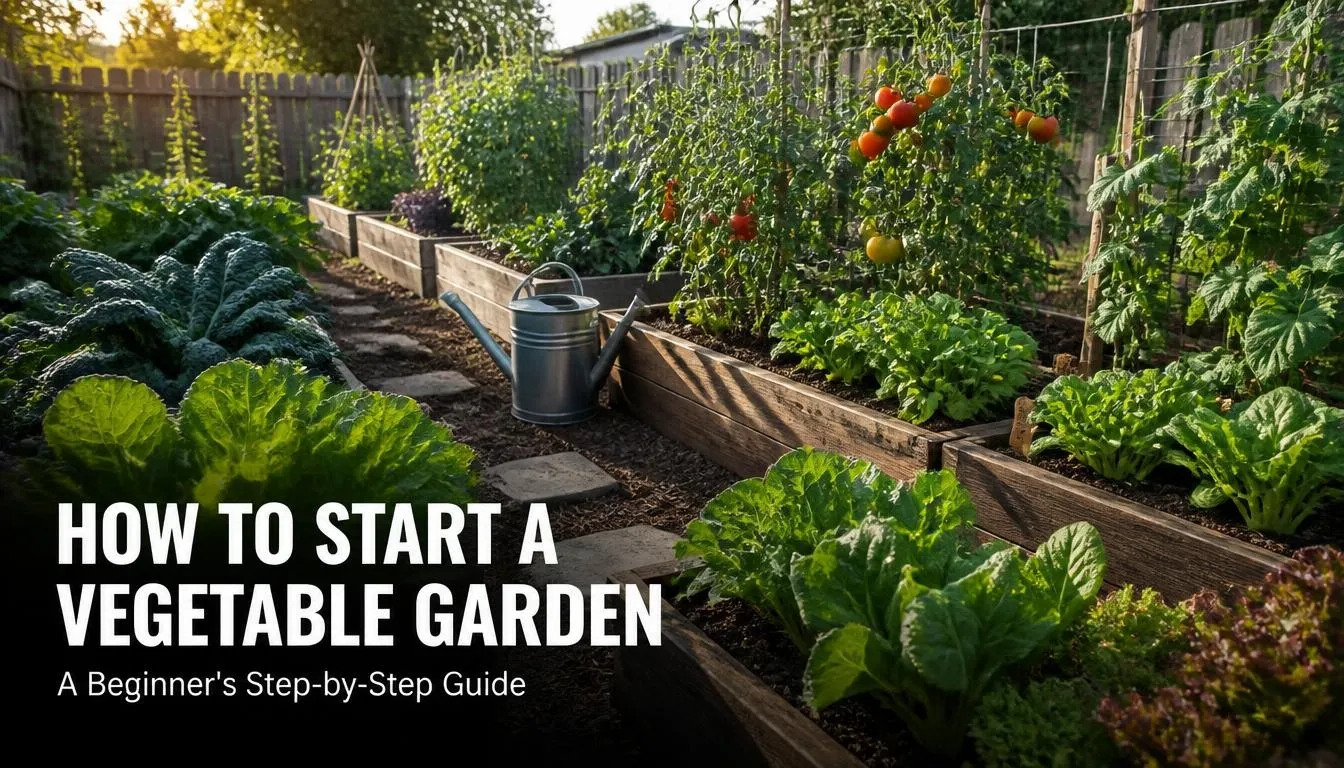
Learning how to start a vegetable garden does not require a large yard, expensive tools, or years of experience. A sunny patch of ground, a raised bed, or a few suitable containers can be enough to grow fresh vegetables at home. The best way to begin is to choose a small space, grow a few crops you enjoy eating, and follow a plan that fits your local climate.
This guide explains how to start a vegetable garden step by step, from choosing a site and preparing soil to planting, watering, managing pests, and harvesting. Use the advice as a starting point, then check local planting guidance because growing seasons differ from one region to another.
Table of Contents
- Plan your first vegetable garden
- Choose the right location
- Choose a garden type
- Prepare the soil
- Choose easy vegetables to grow
- Know when to plant
- Plant seeds and seedlings
- Care for your vegetable garden
- Prevent and manage pests
- Harvest at the right time
- Avoid common beginner mistakes
- Frequently asked questions
1. How to start a vegetable garden: plan your first growing space
The first step in how to start a vegetable garden is deciding what you want to grow and how much time you can spend caring for it. Begin with vegetables your household already eats. This keeps the project useful and helps you avoid growing more food than you can harvest or use. It is also the simplest answer to how to start a vegetable garden without taking on more work than you can manage.
Start small. One raised bed, a short row in the yard, or three to five containers is enough for a first season. This keeps how to start a vegetable garden practical for a beginner. A small space is easier to water, weed, and inspect. You can expand after you learn which crops grow well and how much work the garden requires.
Before you buy seeds, write down the vegetables you want, the sunlight your space receives, the growing season in your area, and how often you can check the plants. Sketch the space on paper and leave room to walk around the beds. Every plant should be reachable without stepping on the growing soil.
2. Choose the right location
Good placement makes how to start a vegetable garden much easier. Most fruiting vegetables, such as tomatoes, peppers, cucumbers, and beans, grow best with at least six to eight hours of direct sunlight a day. Leafy crops, including lettuce and some herbs, can tolerate partial shade, especially in hot climates.
Watch the proposed spot at different times of day. A location that looks sunny in the morning may be shaded by a wall, tree, or building later. Avoid placing the garden too close to large trees because their roots compete with vegetables for moisture and nutrients.
When deciding how to start a vegetable garden, choose a place with these features:
- Enough direct sunlight for the crops you intend to grow.
- Well-drained ground that does not stay waterlogged after rain.
- Easy access to a tap, hose, or other reliable water source.
- Room to reach plants for watering, weeding, and harvesting.
- A way to protect crops from pets or wildlife when necessary.
If water collects in the area after rain, consider another location or a properly built raised bed. Good drainage is an early decision that can determine how to start a vegetable garden with fewer root problems. Vegetable roots need moisture and air; soil that remains saturated can damage roots and encourage disease.
3. Choose an in-ground bed, raised bed, or containers
You do not need a traditional backyard plot to learn how to start a vegetable garden. The best setup for how to start a vegetable garden is the one you can reach, water, and maintain easily. Choose the setup that suits your available space, soil, budget, and crops.
| Which vegetable garden setup should you choose? | |||
| Garden type | Best for | Advantages | What to consider |
| In-ground bed | Yards with suitable, well-drained soil | Uses existing ground and can accommodate larger crops | May need soil testing, digging, and weed removal |
| Raised bed | Poor, compacted, or difficult-to-access ground | Creates a defined growing area with manageable soil depth | Needs safe materials, a suitable location, and enough growing mix |
| Containers | Balconies, patios, paved spaces, and small homes | Flexible placement and no garden plot required | Need drainage and more frequent moisture checks |
In-ground beds
Remove grass and persistent weeds, then loosen compacted soil when it is not wet. If you are unsure about the soil’s condition, get it tested before adding fertilizer or amendments. Avoid digging or cultivating very wet soil because it can compact into hard clumps.
Raised beds
Place the bed on level, sunny ground with good drainage. Use untreated, food-safe materials and fill the bed with a suitable growing mix. If the bed sits over existing ground, consider testing the underlying soil for contamination, particularly near old painted buildings, busy roads, or former industrial sites. A raised bed does not automatically remove risks if roots can reach contaminated soil below.
Containers
Choose a container large enough for the mature plant and make sure it has drainage holes. Use potting mix made for containers rather than dense garden soil. This small choice can make how to start a vegetable garden in a patio or balcony much more successful. Leaf lettuce, radishes, herbs, and compact bush beans can suit smaller pots. Tomatoes, peppers, and cucumbers need larger containers and may need stakes or trellises. See the University of Maryland Extension guide to growing vegetables in containers for crop-specific size examples.
4. Prepare healthy soil before planting
Healthy soil holds moisture while allowing extra water to drain. It should be loose enough for roots to spread and contain organic matter. Adding mature compost can improve soil structure, but fertilizer and other amendments should be based on actual soil needs.
A soil test is a useful starting point for an in-ground bed or a raised bed filled with garden soil. For anyone researching how to start a vegetable garden, it replaces guesswork with information about the soil. It can show soil pH and nutrient levels and provide recommendations. Many vegetables grow well in slightly acidic soil, often around pH 6.0 to 6.8, although requirements vary by crop and local conditions. Do not add lime, sulfur, or fertilizer without a reason.
Simple steps to prepare a garden bed
These simple steps explain how to start a vegetable garden with soil that is ready for seeds or young plants. They also provide a repeatable routine for future planting seasons.
- Remove weeds, grass, stones, and rubbish.
- Loosen compacted soil when it is reasonably dry.
- Mix in mature compost if the soil needs more organic matter.
- Apply fertilizer only when a soil test or crop guidance indicates it is needed.
- Rake the surface level before sowing seeds or planting seedlings.
Do not apply fresh manure directly around growing vegetables. It can damage plants and may introduce harmful microorganisms. Use properly composted material from a reliable source and follow local food-safety advice. For more detail on site preparation and soil testing, read the University of New Hampshire Extension guide to preparing a vegetable garden site.
5. Choose vegetables that are easy to grow
For beginners learning how to start a vegetable garden, the best crops are those that suit the climate, available space, and food preferences. Choose three to five crops for the first season rather than trying to grow everything. Check the seed packet for days to maturity, spacing, planting depth, and temperature requirements. Choosing suitable crops is one of the most practical parts of how to start a vegetable garden successfully.
| Good vegetables for a beginner’s first garden | ||
| Vegetable | Why it is a useful choice | Growing notes |
| Leaf lettuce | Quick-growing and can be harvested a little at a time | Usually prefers cooler conditions and evenly moist soil |
| Radishes | Often ready for harvest in a short time | Sow directly and thin seedlings as directed on the packet |
| Bush beans | Compact plants with a straightforward growing habit | Need warmth, sunlight, and regular picking |
| Tomatoes | Productive and available in many varieties | Need warmth, sunlight, support, and enough root space |
| Cucumbers | Can produce well in suitable conditions | Need warmth, steady moisture, and space or a trellis |
| Kale or Swiss chard | Leafy crops that can provide repeated harvests | Choose the right season and pick outer leaves as needed |
| Peppers | Compact varieties can fit smaller beds and large pots | Need warm conditions, sunlight, and a suitable growing season |
A simple first combination is leaf lettuce, radishes, bush beans, and one or two tomato plants. This gives you a mix of quick crops and longer-season plants. In a hot climate, focus on vegetables suited to the cooler part of the year and provide shade for crops that struggle in intense heat. In a cooler climate, choose varieties that can mature before cold weather returns.
6. Know when to plant in your climate
Planting dates are regional. Anyone learning how to start a vegetable garden should use local planting information rather than copy a schedule from another climate. A calendar written for one country or growing zone may not suit another. Local temperatures, rainfall, day length, elevation, and frost risk all affect when seeds should go into the ground. This is why how to start a vegetable garden should always include checking local planting advice.
Vegetables are often grouped into two broad categories:
- Cool-season crops: Lettuce, peas, spinach, radishes, and many cabbage-family crops generally grow best in cooler weather. Some become bitter or bolt in high heat.
- Warm-season crops: Tomatoes, peppers, cucumbers, beans, and squash need warmer soil and air. Many are sensitive to cold conditions.
Use a planting calendar from a local agricultural extension service, horticultural organization, or trusted garden center. In places with winter frost, check average frost dates and each crop’s cold tolerance. In tropical and subtropical climates, base the plan on local heat and rainfall patterns rather than frost dates alone. The NC State Extension vegetable gardening guide explains seasonal planting and why local recommendations matter.
7. Plant seeds and seedlings correctly
Once your garden bed is ready and the weather suits the crop, follow the instructions on the seed packet or plant label. For beginners asking how to start a vegetable garden, careful sowing is more useful than buying lots of different seeds. Vegetables differ in how deeply their seeds should be planted and how much room mature plants need. Correct spacing gives leaves and roots room to grow and improves airflow.
Planting seeds outdoors
- Prepare a level seedbed and moisten dry soil before sowing.
- Make furrows or holes at the depth shown on the seed packet.
- Sow seeds at the recommended spacing. Small seeds usually need a shallow covering.
- Cover gently and water with a soft spray so seeds are not washed away.
- Keep the seedbed moist while seeds germinate, but do not leave it waterlogged.
- Thin crowded seedlings when they are large enough to handle.
Transplanting seedlings
Choose seedlings with healthy leaves and sturdy stems. Avoid plants with yellowing foliage, obvious pest damage, or roots tightly circling the bottom of the pot. If seedlings were raised indoors or in a greenhouse, gradually expose them to outdoor sun, wind, and temperatures over several days. This process is called hardening off.
Plant each seedling at the depth recommended for that crop, firm the soil gently around its roots, and water it in. A cool, calm part of the day can reduce transplant stress. Keep young plants watered while their roots establish.
8. Care for your vegetable garden
Regular attention matters more than complicated equipment. A simple care routine is a key part of how to start a vegetable garden and keep it productive. Check the garden often and adjust your routine to the weather, soil, and plant growth. A useful routine for anyone learning how to start a vegetable garden includes checking moisture, removing weeds, looking for pests, and harvesting crops when ready.
Water consistently
Check the soil near the root zone before watering. If it is dry below the surface, water slowly around the base of the plants so moisture reaches the roots. Morning is often a practical time to water because foliage can dry during the day. Established plants generally benefit from deeper watering when needed rather than frequent, very light sprinkling.
Seeds and young seedlings need a consistently moist surface while they establish. Containers dry out faster than garden beds, especially in hot, sunny, or windy weather, so check them more often. The goal is moist soil, not permanently waterlogged soil.
Mulch, weed, and support plants
A suitable organic mulch, such as clean straw or shredded leaves, can reduce evaporation and help suppress weeds. Keep it away from plant stems to reduce the chance of rot, and wait until seedlings are established before applying a thick layer. Remove weeds while they are small so they do not compete strongly for water and nutrients.
Use stakes, cages, or trellises for crops that need support, including many tomato and cucumber varieties. Planning support before plants get large is another useful step in how to start a vegetable garden. Install supports early when possible so you do not disturb established roots. Give plants the spacing shown on the packet to reduce crowding and improve airflow.
Feed only when needed
Compost adds organic matter, while fertilizer supplies specific nutrients. Use soil-test results, crop guidance, and label directions to decide what to apply. Excess fertilizer can encourage leafy growth at the expense of fruit, damage roots, or wash away. Weak growth can also be caused by low light, unsuitable temperatures, poor drainage, or pests, so identify the cause before feeding a plant.
9. Prevent and manage pests early
Inspect leaves, stems, and the soil around plants regularly. This habit helps anyone learning how to start a vegetable garden spot trouble before it spreads. Look for holes, discoloration, spots, curling leaves, or wilting. Finding a problem early makes it easier to respond before it spreads across the bed.
Use an integrated pest management approach. This is a sensible way to protect crops as you learn how to start a vegetable garden without reaching for a spray at the first sign of an insect:
- Identify the cause. Check for insects, eggs, feeding damage, disease symptoms, or signs of water stress.
- Judge the damage. A few holes in leaves do not always threaten a plant. Watch whether the problem is increasing.
- Try low-risk controls first. Remove badly damaged leaves, hand-pick larger pests when practical, use suitable insect netting, and control weeds.
- Keep plants healthy. Provide appropriate spacing and water at soil level where practical. Clean tools after working with diseased plants.
- Use pesticides only when necessary. Choose a product approved for the crop and pest in your area, follow the label exactly, and observe harvest intervals.
Do not spray simply because you see an insect. Some insects are pollinators or natural predators of garden pests. Identify the problem first, and avoid treatments that could harm helpful insects unnecessarily.
10. Harvest vegetables at the right time
Harvesting at the right stage improves quality and can encourage some plants to keep producing. It is one of the satisfying final steps in how to start a vegetable garden and enjoy its produce. The largest vegetable is not always the tastiest. Leaf lettuce, kale, and Swiss chard can often be harvested by removing outer leaves while leaving the growing center intact. Pick beans and cucumbers while they are still tender, using the variety’s harvest guidance as a reference.
Tomatoes are generally ready when they reach their mature color and have the expected firmness for the variety. Check root crops according to their expected maturity time; you can gently move soil aside to inspect their size. Use clean scissors or garden shears where pulling could damage a stem.
Harvest regularly, remove rotting produce, and keep picked vegetables out of direct sun. Wash produce with clean water before eating and store each crop according to its needs.
11. Common beginner mistakes to avoid
Many first-season problems come from planning and care rather than the seeds themselves. Understanding these basics makes how to start a vegetable garden less frustrating. When working out how to start a vegetable garden, avoid these common mistakes:
- Starting too big: Begin with a small bed or a few containers you can manage.
- Choosing too much shade: Match crops to the direct sunlight available.
- Planting at the wrong time: Follow local seasonal guidance and crop temperature needs.
- Overcrowding plants: Follow seed-packet spacing and thin seedlings where needed.
- Overwatering: Check soil moisture instead of watering automatically every day.
- Using dense soil in pots: Use a suitable container mix and provide drainage holes.
- Applying too much fertilizer: Follow soil-test advice and product directions.
- Ignoring small problems: Inspect plants regularly and act when a problem is identified.
12. A simple first-month garden checklist
Use this checklist to turn how to start a vegetable garden into manageable tasks. It breaks down how to start a vegetable garden into a few simple actions you can complete in sequence. Adjust the timing to your local season and the instructions for the crops you choose.
| First steps for a new vegetable garden | ||
| When | What to do | What to check |
| Before planting | Choose the site, garden type, crops, and planting dates; test soil if appropriate | Sunlight, drainage, water access, local season |
| Planting day | Prepare the bed or pots, sow seeds or transplant seedlings, and water gently | Seed depth, spacing, labels, drainage |
| Weeks 1–2 | Keep seedbeds moist, check transplants, and remove small weeds | Germination, soil moisture, transplant stress |
| Weeks 3–4 | Thin seedlings, add supports, and mulch established plants if suitable | Spacing, leaf health, pests, water needs |
| As crops mature | Harvest regularly and record which varieties perform well | Ripeness, new growth, plant health |
Frequently asked questions
How much space do I need to start a vegetable garden?
You can begin with a few containers or a small bed. That is often the easiest way to learn how to start a vegetable garden before expanding. The right size depends on the number of crops you want and the time you can spend maintaining them. A small, well-managed garden is a good first project.
What is the easiest vegetable to grow for beginners?
Radishes, leaf lettuce, bush beans, and Swiss chard are often manageable choices when planted in the right season. The easiest crop for you depends on your climate, sunlight, and the variety you select.
Can I start a vegetable garden without a backyard?
Yes. Containers can work on a balcony, patio, rooftop, or other outdoor space. They are a practical answer for people learning how to start a vegetable garden without a yard. Choose pots with drainage holes and enough volume for the crop, use container potting mix, and provide suitable sunlight.
How much sunlight does a vegetable garden need?
Many vegetables grow best with at least six hours of direct sunlight a day. Fruiting crops such as tomatoes and peppers generally need plenty of sun, while leafy greens can tolerate some shade.
How often should I water a vegetable garden?
There is no single schedule for every garden. Learning how to start a vegetable garden includes learning to check the soil rather than follow a fixed watering timetable. Watering depends on temperature, rainfall, wind, soil, container size, and plant stage. Check moisture near the roots and water when the soil begins to dry, while keeping newly sown seeds from drying out.
Should I grow vegetables from seeds or seedlings?
Both methods work. The right choice depends on the crop and the season, so consider that when deciding how to start a vegetable garden. Radishes, beans, and peas are commonly sown directly outdoors. Tomatoes and peppers are often started indoors or purchased as seedlings in regions with shorter growing seasons. Follow the guidance for each crop.
Do I need compost and fertilizer?
Compost adds organic matter and can improve soil structure. A soil test helps beginners decide how to start a vegetable garden without applying products unnecessarily. Fertilizer supplies specific nutrients. A soil test can help you decide what your garden needs. Use mature compost and apply fertilizer according to crop requirements and label directions.
How long does it take to grow vegetables?
It varies by crop and variety. Knowing the expected growing time helps you plan how to start a vegetable garden with realistic expectations. Some radishes and leafy greens can be ready within weeks, while peppers and many tomatoes take longer. Use the days-to-maturity information on the seed packet as a guide, remembering that weather affects growth.
Final thoughts: grow a little, learn a lot
Once you understand how to start a vegetable garden, the process becomes a series of manageable habits: choose a suitable site, prepare the soil, plant crops in season, water when needed, and check plants regularly. Start with a few vegetables you enjoy, keep simple notes, and make adjustments as you learn.
Your first garden does not need to be perfect. A small bed or a few containers can teach you what grows well in your space and what you would like to plant next season. With steady care and realistic expectations, you can build a productive home vegetable garden one harvest at a time.
Trusted vegetable gardening resources
- University of Maryland Extension: How to Start a Vegetable Garden
- University of New Hampshire Extension: Preparing a Vegetable Garden Site
- University of Illinois Extension: Getting Started With Home Vegetable Gardening
- University of Maryland Extension: Growing Vegetables in Containers
- NC State Extension: Home Vegetable Gardening Quick Reference Guide